
We predict the dynamics of animal populations and disease, including COVID-19.
We predict the dynamics of animal populations and disease, including COVID-19.
Wildlife Population Dynamics
We work with clients around the world to help them forecast the effects of harvest, climate change and industrial development on wildlife populations.
ApexRMS is a leader in supporting management decisions regarding wildlife harvest. We've developed DG-Sim, an open-source SyncroSim package, for forecasting wildlife population size and harvest under various management scenarios. DG-Sim is the product of a decade's worth of collaboration with resource management agencies, including the Yukon Government, Government of Northwest Territories, Government of Alberta, Environment Canada, and the Government of Greenland, and has been used to support harvest management decisions for barren-ground caribou, reindeer, and muskoxen (e.g. Cuyler, Daniel, Enghoff, Levermann et al., 2020) across Alaska, Canada, and Greenland.
We also champion the development of new approaches for forecasting cumulative impacts on caribou populations. Our Caribou Cumulative Effects (CCE) SyncroSim package, which has evolved through more than 25 years of work with experts from across the Canadian and Alaskan arctic, dynamically links sub-models of caribou movement, body condition, and population dynamics (i.e. DG-Sim) to project population-level consequences of changes in industrial development, caribou harvest, and climate. CCE has recently been used to forecast the cumulative impact of proposed developments within the ranges of the Bathurst and Porcupine barren-ground caribou herds.
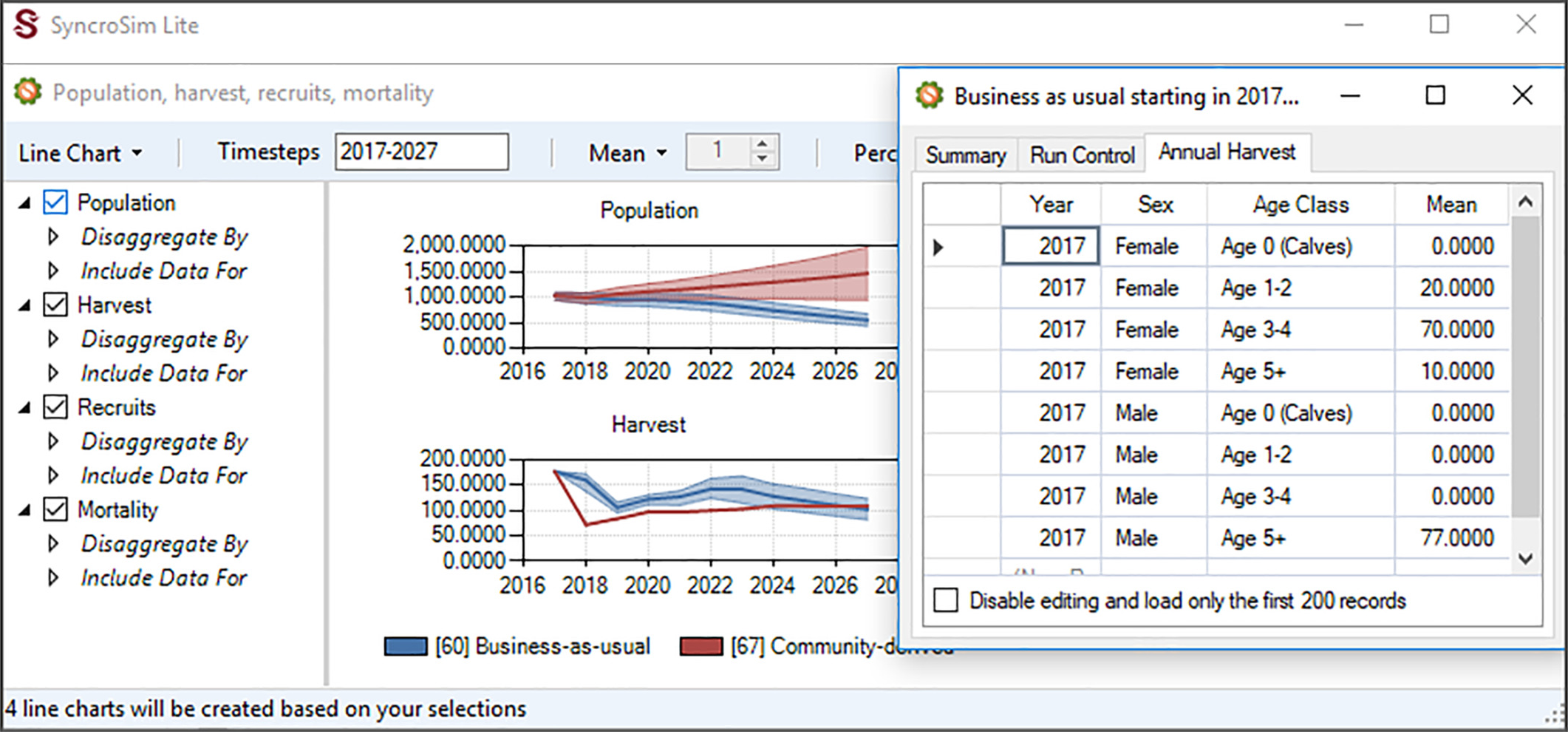
Population size and harvest estimates of a muskoxen herd in Greenland modeled using the SyncroSim package, DG-Sim.
Selected Clients:





Disease Dynamics
Built upon our SyncroSim modeling framework, we have developed a generalized pandemic forecasting system, Epi, to provide real-time forecasts of infections and deaths that can be rapidly deployed for use anywhere in the world. With access to daily-updated data in the standardized, user-friendly format of SyncroSim, users can generate forecasts that are specific to their jurisdiction and questions.
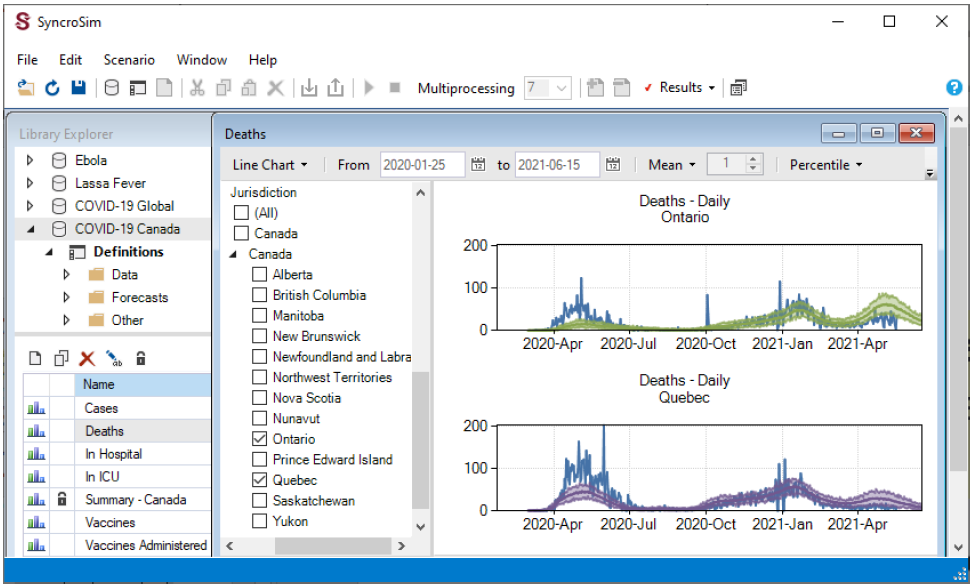
Estimates of COVID-19 deaths generated by the SyncroSim package, Epi.
Selected Clients:

Wildlife Population Dynamics
We work with clients around the world to help them forecast the effects of harvest, climate change and industrial development on wildlife populations.
ApexRMS is a leader in supporting management decisions regarding wildlife harvest. We've developed DG-Sim, an open-source SyncroSim package, for forecasting wildlife population size and harvest under various management scenarios. DG-Sim is the product of a decade's worth of collaboration with resource management agencies, including the Yukon Government, Government of Northwest Territories, Government of Alberta, Environment Canada, and the Government of Greenland, and has been used to support harvest management decisions for barren-ground caribou, reindeer, and muskoxen (e.g. Cuyler, Daniel, Enghoff, Levermann et al., 2020) across Alaska, Canada, and Greenland.
We also champion the development of new approaches for forecasting cumulative impacts on caribou populations. Our Caribou Cumulative Effects (CCE) SyncroSim package, which has evolved through more than 25 years of work with experts from across the Canadian and Alaskan arctic, dynamically links sub-models of caribou movement, body condition, and population dynamics (i.e. DG-Sim) to project population-level consequences of changes in industrial development, caribou harvest, and climate. CCE has recently been used to forecast the cumulative impact of proposed developments within the ranges of the Bathurst and Porcupine barren-ground caribou herds.
Population size and harvest estimates of a muskoxen herd in Greenland modeled using the SyncroSim package, DG-Sim.
Selected Clients:

Selected Clients:
Disease Dynamics
Built upon our SyncroSim modeling framework, we have developed a generalized pandemic forecasting system, Epi, to provide real-time forecasts of infections and deaths that can be rapidly deployed for use anywhere in the world. With access to daily-updated data in the standardized, user-friendly format of SyncroSim, users can generate forecasts that are specific to their jurisdiction and questions.
Estimates of COVID-19 deaths generated by the SyncroSim package, Epi.
Selected Clients:
Selected Clients:
